How to Survive a Marvel Rivals Lose-and-End Challenge Without Tilt
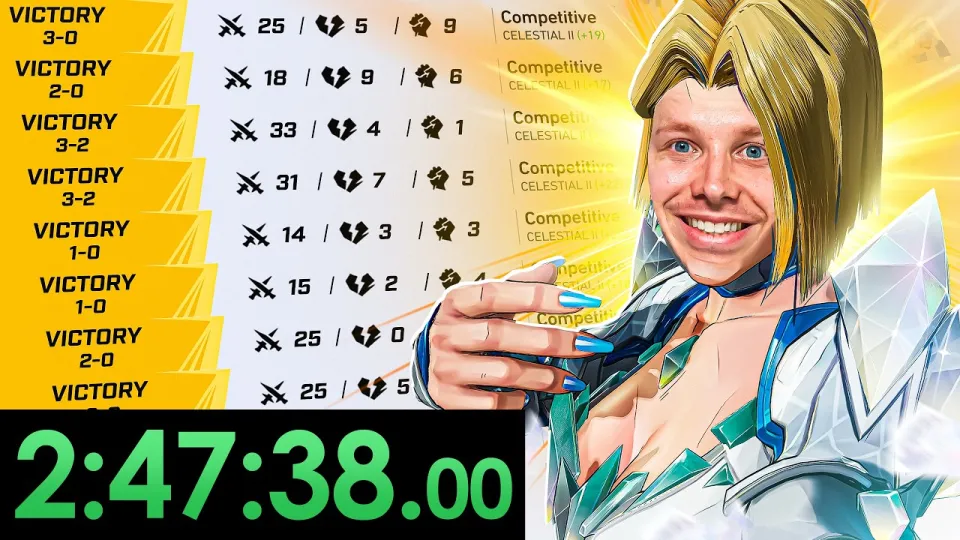
Video: IF I LOSE, THE VIDEO ENDS... (Marvel Rivals)
Need articles like this for your video? They help promote it on YouTube and Google — order them in the Telegram bot @sat_sit_bot. The bot writes and publishes the articles itself (with your YouTube video embedded) on popular topical websites (no ads). Free trial — 50 articles.
· based on the channel Jay3
Marvel Rivals lose-and-end challenges are simple to survive on paper: queue into a match, win, and repeat until the run is long enough to publish. The rule that makes it hard is the one in the title — a single loss ends the video, so every match carries the pressure of a final. Streamers like Jay3 lean on that tension because it turns an ordinary ranked session into a self-imposed gauntlet, and viewers can follow the stakes without knowing the hero roster. If you want to watch the format live rather than edited, the streamer's channel at Twitch is where the unedited version of these runs happens.
What a Marvel Rivals lose-and-end challenge actually is
A lose-and-end challenge is a self-imposed rule set where the creator keeps playing Marvel Rivals until the first defeat, and that defeat immediately ends the recording. There is no best-of series and no second chance: the run length is decided entirely by whether the next match is a win. That is a different pressure from a standard ranked climb, where a 55% win rate still moves you upward over a hundred games.
Jay3 built the format into a video published on 2 October 2026, using it as the spine of a Marvel Rivals session rather than a one-off stunt. The appeal for an audience is obvious: the stakes are legible within seconds, and every teamfight in the late stages of a run looks like a potential ending.
Why the format is harder than it looks
Marvel Rivals is a 6v6 hero shooter from NetEase Games, released in December 2024, and its team-based structure means a single player rarely controls the outcome. A win streak of even five games requires five separate lobbies where nobody on your side disconnects, refuses to swap, or locks a fourth duelist into a team that needed a strategist. The lose-and-end rule converts all of that variance into a countdown.
Three factors decide most runs:
- Team composition discipline. A lobby with four duelists and one strategist usually loses to a balanced 2-2-2 setup, regardless of individual skill.
- Thrower and disconnect risk. A single player abandoning the match or deliberately feeding removes any chance of extending the run.
- Counter-picking. Marvel Rivals rewards swapping mid-match, and a player who refuses to change heroes after being countered is the most common reason a streak dies.
For a streamer, there is a fourth factor: being targeted. High-visibility names attract players who want the clip, and a dedicated dive hero on the enemy team can turn a normal match into a personal vendetta.
Typical questions and complaints from the Marvel Rivals community
The most common frustration around Marvel Rivals right now is not balance but matchmaking behaviour — teammates who treat a ranked lobby as a sandbox. Players report Strange portals that drop the team off the map, Jeff and Squirrel Girl picks used to throw rather than to compete, and placement runs where most games are decided before the first fight. A lose-and-end format amplifies exactly this: one such lobby and the whole video is over.
The second recurring theme is streamer targeting. When a known name appears in a lobby, enemy players will sometimes abandon the objective entirely to chase that one player, which is entertaining for the audience and miserable for the run. The third is content fatigue: part of the audience came from Overwatch and keeps asking for a return to it, while another part wants more Marvel Rivals. A creator running both is effectively managing two communities with different expectations.
How to run your own lose-and-end session without losing your mind
You can copy the format for a stream or a personal challenge, but a few rules keep it from becoming a tilt simulator.
- Set a floor before you start. Decide that the run ends on a loss, but cap the session at a fixed number of matches so a bad night does not turn into six hours of frustration.
- Play your best role, not your most fun role. The format rewards consistency; a comfort pick with a 60% win rate beats a flashy pick at 45%.
- Warm up off-stream. Two or three quick matches before recording removes the rust that kills streaks in match one.
- Track your losses honestly. Note the reason for each defeat — composition, disconnect, or your own misplay — and the pattern becomes obvious within a week.
- Accept the ending. The format only works if the loss is real; editing around it defeats the purpose and the audience will notice.
Where to find Jay3 and the rest of his Marvel Rivals content
Jay3 publishes across several channels and platforms, and the Marvel Rivals runs sit alongside his Overwatch background as a former Grandmaster player.
- Live streams: https://twitch.tv/jay3
- Twitter/X: https://twitter.com/jay3ow
- TikTok: https://tiktok.com/@jay3twitch
- Instagram: https://instagram.com/jay3twitch
- Discord community: https://discord.gg/jay3
The bottom line on Marvel Rivals lose-and-end runs
A Marvel Rivals lose-and-end challenge is a content format, not a ranking strategy: it converts a normal ranked session into a single-elimination run where one bad lobby ends everything. Jay3's take on it, published on 2 October 2026, shows both why the format works for viewers — instant stakes, visible tension — and why it is brutal for the player, because Marvel Rivals' 6v6 structure puts much of the outcome outside one person's control. If you want to try it, warm up first, lock your best role, and treat the first loss as the point of the exercise rather than a failure. For the live, unedited version of these runs, follow Jay3 on Twitch.
Key takeaways
- A lose-and-end challenge ends the video or stream the moment the player loses a single Marvel Rivals match.
- Jay3, a former Overwatch Grandmaster and full-time variety streamer, ran the format in a Marvel Rivals video published on 2 October 2026.
- Marvel Rivals is a free-to-play 6v6 hero shooter from NetEase Games, launched in December 2024.
- The format punishes one loss rather than a win-rate, so a single thrower, disconnect or bad team composition can end the run.
- Viewer discussion around the video focused on throwers, Spider-Man players hard-targeting streamers and requests for Overwatch content.
Questions & answers
What happens if the streamer loses in a Marvel Rivals lose-and-end video?
The run stops immediately — that is the entire rule. The video or stream ends on the first defeat, so the published length reflects how long the win streak lasted. It is a self-imposed format, not a game mode, so nothing in Marvel Rivals enforces it.
Is Marvel Rivals free to play?
Yes. Marvel Rivals is a free-to-play 6v6 hero shooter developed and published by NetEase Games, released in December 2024 on PC, PlayStation 5 and Xbox Series X|S. Cosmetics are sold separately, but the full hero roster is available without paying.
Why do streamers get targeted so much in Marvel Rivals lobbies?
Recognisable names attract players hunting a clip, so enemy dive heroes will sometimes ignore the objective to chase one target. It makes for good viewing but it shortens lose-and-end runs, since the streamer's team is effectively playing a 5v6 on the point.
How many games can a lose-and-end run realistically last?
With a strong player and a favourable role, streaks of five to ten matches happen, but the odds compound against you quickly. At an optimistic 60% win rate, the chance of surviving ten straight games is under 1%, which is why most runs end well before that.
Source: IF I LOSE, THE VIDEO ENDS... (Marvel Rivals) · Markdown version